
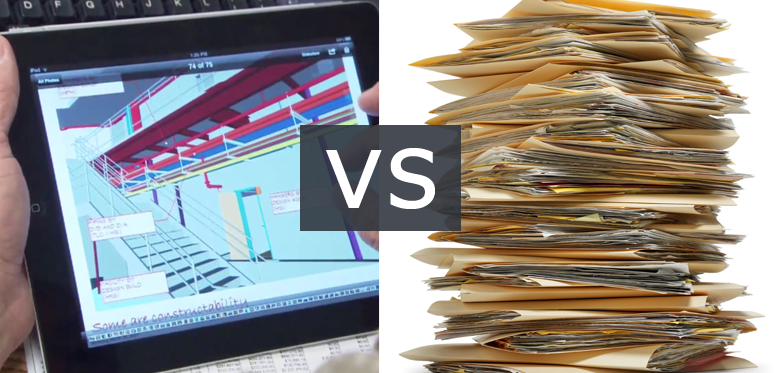
Document control on a construction site is a critical process. Not setting it up properly from the beginning of a project can have significant implications for the final product—and for the successful delivery of the project itself.
Every construction project produces a large volume of information that has to be organised, reviewed, approved, stored and distributed correctly. More importantly, this information needs to reach the right people at the right time.
If engineers, supervisors or subcontractors use an outdated drawing, an unapproved material submission or the wrong revision of a method statement, the result can be rework, delays, nonconformance reports (NCRs), contractual disputes and additional costs.
Document control should therefore not be treated simply as a place where files are stored. It is an important part of construction quality management and provides a controlled process for creating, reviewing, approving, issuing, revising, distributing and archiving project information.
In simple terms, an effective construction document control system should ensure that:
- Documents can be identified easily.
- Only reviewed and approved documents are formally issued.
- Everyone can identify the current revision and status.
- The right people receive the right information.
- Superseded documents cannot be used accidentally.
- Every issue, revision and approval can be traced.
- Final project records are complete and easy to retrieve.
This article explains how to establish a practical construction document control procedure, what should be included in a construction document register and the seven document control principles that every construction team should follow.
What is document control in construction?
Construction document control is the process used to manage project documents throughout their entire lifecycle.
This lifecycle normally starts when a document is created or received and continues through its review, approval, issue, revision, distribution, use, storage and eventual archiving or disposal.
Controlled construction documents can include:
- Design drawings and specifications
- Method statements
- Inspection and Test Plans (ITPs)
- Material and technical submittals
- Requests for Information (RFIs)
- Inspection requests and quality records
- Nonconformance reports and corrective action reports
- Risk assessments and permits
- Calculations and test certificates
- Meeting minutes and site instructions
- Variations and transmittals
- As-built drawings
- Operation and maintenance manuals
- Handover records
The objective is not simply to keep these documents in folders. The objective is to make sure that people can immediately determine:
- What the document is
- Who produced it
- Who reviewed and approved it
- What revision it is
- What its current status is
- When it was issued
- Who received it
- Whether it is still valid for use
Without this information, a folder full of files is not a document control system.
Why is document control important on a construction project?
Construction teams make decisions and carry out work based on information.
A supervisor may use a drawing to set out walls. An engineer may use an approved material submittal to check a delivery. A quality inspector may use an ITP to determine which inspections and hold points are required.
If any of those documents are incorrect, incomplete, unapproved or superseded, the work may also be incorrect.
Poor document control can lead to:
- Construction based on outdated drawings
- Installation of unapproved materials
- Use of obsolete method statements
- Missed inspections and hold points
- Rework and delays
- NCRs and corrective actions
- Incomplete quality records
- Difficulty demonstrating contractual compliance
- Disputes over what information was issued and when
- Missing as-built or handover documentation
Good document control creates a reliable audit trail. It allows the project team to demonstrate what was submitted, what was approved, when it was issued and which revision was valid at a particular point in time.
Document control also connects several other quality processes. An approved ITP defines which inspections and records are required. An RFI records how unclear design information was resolved. An NCR documents work that did not meet a requirement. A quality audit in a construction project then checks whether these processes and their associated records are being controlled properly.
Construction document control procedure
A construction document control procedure should describe how project information will be managed from creation through final handover.
It will normally sit alongside the other quality procedures for a construction project, such as procedures for inspections, NCRs, corrective actions, audits, material approvals and handover.
ISO 9001:2015 does not automatically require every organisation to maintain a separate written document control procedure. It does, however, require documented information to be controlled.
For a construction project with multiple designers, consultants, contractors and subcontractors, a written procedure is normally the most practical way to define how that control will work.
The procedure should cover the following steps.
1. Establish the rules at the beginning of the project
Document control should be planned before large volumes of information begin to accumulate.
The project team should agree:
- The approved document management system or common data environment
- The document numbering convention
- Revision and status codes
- File naming rules
- Required metadata
- Review and approval workflows
- Distribution methods
- Transmittal requirements
- Access permissions
- Retention periods
- Handover requirements
- Responsibilities for maintaining the document register
These requirements may be defined by the client, principal contractor, consultant or project information standard.
Whatever system is selected, it should be explained clearly to everyone who creates, reviews, issues or uses project information.
The document control procedure should also align with the project’s Quality Plan. Document control is not an isolated administrative process; it supports the wider system used to plan, inspect, record and verify construction quality.
2. Define roles and responsibilities
The procedure should identify who is responsible for each stage of the process.
The project manager will normally approve the overall procedure and make sure that sufficient resources are available.
The document controller may be responsible for maintaining the register, checking document information, formally issuing documents and archiving superseded revisions.
Design managers and engineers will normally coordinate technical reviews and approvals.
The quality manager should verify that the agreed controls are being followed and that the necessary quality records are available.
Site supervisors and engineers are responsible for making sure that only current, approved information is used at the workface.
Subcontractors and suppliers must submit their documents through the agreed channels and respond to comments or status changes.
The exact responsibilities will vary between projects, but they should never be left unclear.
3. Give every controlled document a unique number
Every controlled document should have a unique number or reference so that it can be identified and traced easily.
A document number may include:
- Project code
- Originating organisation
- Discipline
- Area or location
- Document type
- Sequential number
- Revision
For example:
QIC-PROJ-CIV-ITP-0012-Rev03
This is only an example. The numbering system used on a real project should follow the client’s requirements and the agreed project procedure.
The important point is that two different documents should not have the same identification number and that the numbering format should be applied consistently.
The numbering system should also be agreed before mobilisation. Changing it after hundreds or thousands of documents have been produced creates unnecessary confusion and administrative work.
4. Review and approve documents before issue
A document should not become available for construction simply because someone has uploaded or emailed it.
The procedure should define:
- Who prepares the document
- Who checks it
- Who provides technical approval
- Whether client or consultant approval is required
- How comments are recorded and closed
- What status is assigned after the review
- Who is authorised to issue the document
The review and approval history should remain traceable.
Where electronic workflows are used, the system may record this history automatically. Where documents are managed manually, the approval evidence may be captured through signatures, approval forms, transmittals or register entries.
5. Record documents in a construction document register
The document register is the central index of controlled project information.
It should show which documents exist, their latest revisions, their current status and their issue history.
A construction document register may include:
- Document number
- Document title
- Document type
- Discipline
- Originator
- Responsible person
- Current revision
- Current status
- Date received
- Date submitted for review
- Review due date
- Approval date
- Date issued
- Transmittal reference
- Distribution list
- Superseded revision
- File location
- Remarks
The register must be kept current. If the actual document is revised but the register is not updated, the register becomes misleading and can create more confusion instead of providing control.
The register should therefore be updated as part of the formal issue process—not several days or weeks afterwards.
6. Issue documents through a controlled distribution process
Formally controlled documents should be issued through the agreed system or through a controlled transmittal.
A transmittal should normally identify:
- The sender
- The recipient
- The documents being issued
- Each document’s revision
- Each document’s status or purpose of issue
- The date of issue
- Any action required
- The required response date, where applicable
Email may be used to notify people that a document has been issued, but an email chain alone should not become the official document control system.
People regularly forward attachments, rename files or continue using documents saved locally. A controlled issue process provides a more reliable record of exactly what was issued and when.
7. Control revisions and superseded documents
When an approved document is revised, the new revision should supersede the previous one through a controlled process.
The revision should be clearly identified, and the project team should be able to see what has changed. Changes may be shown through revision clouds, change marks, different colours or a revision description.
The revised document should then follow the required review and approval workflow.
Once the new revision has been formally issued:
- The document register should be updated.
- Relevant users should be notified.
- The previous revision should be marked as superseded.
- Obsolete digital copies should be locked or moved to a controlled archive.
- Controlled printed copies should be removed or replaced.
- The issue and distribution record should be retained.
Superseded documents may still be required as historical records, so they should not always be destroyed. However, they must be clearly separated from current documents and protected against unintended use.
8. Control access and permissions
Not every project participant should be able to edit, approve or delete every document.
Access should be based on each person’s role and responsibilities.
Some users may need permission to view documents, while others may be authorised to upload, review, approve, issue or archive them.
The system should protect information from:
- Unauthorised changes
- Accidental deletion
- Loss of confidentiality
- Inappropriate distribution
- Damage or corruption
- Loss of traceability
Access permissions should be reviewed when people join the project, change roles or leave.
9. Control external documents
Not all controlled information is produced by the project team.
External documents can include:
- Client specifications
- Supplier manuals
- Product certificates
- Manufacturer’s instructions
- Technical standards
- Statutory requirements
- Authority approvals
- Consultant drawings
- Subcontractor submissions
The project team should identify which external documents are necessary for the planning and execution of the work.
Their source, revision or issue date, distribution and current status should also be controlled where relevant.
10. Retain and archive project records
The procedure should explain how long different documents and records must be retained.
Retention periods may be determined by:
- Contract requirements
- Client requirements
- Legal obligations
- Regulatory requirements
- Warranty periods
- Company policy
- ISO management system requirements
At the end of the project, the team should be able to provide an organised and complete handover package.
This may include approved as-built drawings, operation and maintenance manuals, inspection and test records, certificates, warranties and other information required by the contract.
Document control should therefore support handover from the beginning of the project. It should not be treated as an exercise that only starts during the final few weeks.
Electronic document management and BIM
The document control system could be an electronic document management platform, a common data environment, a controlled shared drive or—in smaller projects—a carefully managed hard-copy system.
For larger projects, cloud-based construction document management systems can provide automated workflows, permissions, revision histories and audit trails.
However, the technology itself is not the most important part. A sophisticated system will not solve the problem if the project team does not follow the agreed procedure or if documents are approved outside the formal workflow.
Where BIM is being used, document control should also be coordinated with the project’s information model and common data environment. The relationship between BIM and quality management becomes particularly important when drawings, inspections, NCRs and handover information are connected to model elements.
Document revision and status control
A document’s revision and its status are not necessarily the same thing.
The revision identifies the version of the document. The status describes its suitability or purpose.
Possible status descriptions may include:
- Work in progress
- For information
- For review
- For approval
- Approved
- Approved with comments
- Rejected
- Issued for construction
- As built
- Superseded
The exact codes should be defined in the project procedure.
A drawing marked “Issued for Construction” is not enough on its own. The person using it must also be able to confirm that it is the latest approved revision.
This is particularly important when printed drawings are used on site. A printed drawing may still carry an “Issued for Construction” status even though a newer revision has subsequently been approved.
If printed copies are necessary, the project should maintain a controlled-copy system showing:
- Which document was printed
- Its revision
- Who received it
- Where it is kept
- When it was replaced
- Who confirmed the replacement
ISO 9001 requirements for document control
Document control is also closely connected to the organisation’s Quality Management System. My complete guide to ISO 9001 requirements explains how documented information fits within the wider system of processes, responsibilities, audits, corrective actions and continual improvement.
ISO 9001:2015 uses the term “documented information” rather than treating documents and records as completely separate systems.
In practical terms, documented information should be:
- Available and suitable for use where and when it is needed
- Appropriately protected
- Properly identified and described
- Reviewed and approved for suitability and adequacy
- Controlled during distribution, access, retrieval and use
- Stored and preserved appropriately
- Subject to version and change control
- Retained and disposed of in a controlled way
There is also a useful practical distinction between maintained and retained documented information.
Maintained documented information describes how something should be done or what requirements apply. Examples include procedures, drawings, specifications, method statements and ITPs.
Retained documented information provides evidence of what actually happened. Examples include completed inspection forms, test results, signed permits, approvals and training records.
Both types need control, but they are not always managed in exactly the same way.
A procedure may be revised and reissued. A completed inspection record would normally be protected as evidence and should not be changed without an authorised and traceable correction process.
Seven best practices for construction document control
So, let’s look at the seven principles that are particularly important for document control on a construction project, no matter how large or small it is.
1. Engineers and construction teams should have easy access to the documents relevant to their work
People on site need access to the correct information when they need it.
The system could be an electronic document management platform, a common data environment, a controlled shared drive or—in smaller projects—a carefully managed hard-copy system.
The technology itself is not the most important part.
The important part is that engineers, supervisors and subcontractors can retrieve the latest approved drawings, method statements, ITPs and other information needed to carry out the work.
If people cannot find the correct documents, work may stop—or continue without controlled information.
Access should also be practical at the workface. A perfect document system in the project office is not enough if supervisors and operatives cannot obtain current information in the field.
2. People on site should be informed when a controlled document changes
There needs to be a defined method for notifying relevant people when a new revision is issued.
This is especially important for design drawings, method statements, material approvals and documents that directly affect construction activities.
Notification may be provided through the document management system, a formal transmittal, email notification or a project coordination meeting.
However, the formal system should remain the official record of the issue.
The notification should identify:
- What changed
- The new revision
- The document’s status
- When it becomes effective
- Whether previous copies must be returned or destroyed
- Whether work already completed needs to be reviewed
Without a controlled notification process, there is a significant risk that part of the project team will continue working from outdated information.
3. Changes between revisions should be easy to identify
People should be able to determine what has changed between the current and previous revisions.
Changes can be identified using:
- Revision clouds
- Marked-up text
- Different colours
- Change bars
- A revision description
- A schedule of changes
The method will depend on the type of document and the project requirements.
Clearly identifying changes allows reviewers to focus on the revised information and helps site teams understand whether the change affects work already planned or completed.
4. Every controlled document should have a unique reference
A unique document number makes identification, retrieval and traceability much easier.
The number should be supported by other information such as the title, revision, status, originator and issue date.
The agreed coding and numbering system should be described in the project’s document control procedure or information management plan.
It should also be applied consistently by the client, consultants, contractor, subcontractors and suppliers where the contract requires a shared convention.
5. A new approved revision should immediately supersede the previous revision
Once a new revision has been approved and formally issued, the previous revision must no longer be available for normal use.
Electronic systems should make the current revision easy to identify and restrict access to superseded versions where appropriate.
Previous revisions should be retained in a controlled archive if they are needed for traceability, contractual evidence or project records.
Printed copies require additional attention. Old drawings and documents should be collected, replaced or clearly marked so that they cannot be used accidentally.
The objective is not simply to upload the latest revision. The objective is to prevent the previous revision from remaining in circulation.
6. The status of every document should be immediately recognisable
People in the field should not have to guess whether a document is suitable for construction.
A document’s status may be shown through an approval code, stamp, workflow status, signature or other agreed method.
However, the status must always be considered together with the revision.
Marking a document “Issued for Construction” does not prove that a printed or downloaded copy is still current. The user should verify both the issue status and the latest approved revision against the authorised system or register.
7. There should be one authorised source of document distribution
Every construction project should establish one authorised source of truth for controlled documents.
This does not mean that documents can never be discussed or shared through email or meetings. It means that copies received informally must be verified against the authorised document system before they are used.
People frequently retain attachments in their inboxes, download drawings to personal folders or circulate copies through messaging applications. These copies can quickly become outdated.
The procedure should therefore make it clear that the approved document platform, common data environment or controlled register is the source used to confirm the latest valid information.
The procedure will only work if the project team understands it. Short inductions and quality toolbox talks can be used to explain document numbering, approval statuses, superseded drawings and the correct source of project information to engineers, supervisors and subcontractors.
Common construction document control mistakes
Even when a project has a document management system, poor working practices can still create problems.
Common mistakes include:
- Using email inboxes as the official filing system
- Allowing several uncontrolled storage locations
- Failing to update the document register promptly
- Using inconsistent document numbers or filenames
- Issuing documents without a transmittal
- Confusing revision with approval status
- Leaving superseded printed drawings on site
- Giving too many users editing or deletion permissions
- Failing to control documents received from suppliers or consultants
- Waiting until the end of the project to organise handover records
- Assuming that uploading a document means it has been formally approved
- Failing to check which documents are actually being used at the workface
A document control audit should look beyond the project office and the electronic system.
The auditor should also check what information engineers, supervisors and subcontractors are actually using on site.
Construction document control audit checklist
Document control should be checked through regular project monitoring and internal audits. The results can also be included in the project’s construction quality metrics and KPIs, particularly where the team monitors overdue submissions, approval turnaround times, missing records or repeated use of incorrect revisions.
The following questions can be used during a project audit:
- Is there an approved document control procedure?
- Is responsibility for maintaining the document register clearly assigned?
- Does the register show the latest revision and status of every controlled document?
- Can each formal issue be traced to a transmittal or system record?
- Are review and approval responsibilities clearly defined?
- Are overdue reviews and submissions being monitored?
- Are field teams using current approved drawings?
- Are superseded documents restricted against unintended use?
- Are printed controlled copies recorded and replaced?
- Are external documents identified and controlled?
- Are access permissions appropriate?
- Can project information be retrieved quickly?
- Are document changes clearly identified?
- Are final handover documents being tracked?
- Are completed quality records protected against unauthorised alteration?
Any differences between the register, the electronic repository and the documents being used on site should be investigated.
Related construction quality guides
Document control connects with almost every other project quality process. You may also find the following guides useful:
- Construction Quality Management: Guides, Templates and Checklists
- Inspection and Test Plan in Construction
- NCR in Construction: Process, Examples and Template
- RFI in Construction: Meaning, Process and Examples
- Quality Audits in Construction Projects
- Quality Procedures for a Construction Project
- ISO 9001 Explained: A Practical Guide
Frequently asked questions
What is a construction document register?
A construction document register is a controlled list of project documents. It normally records each document’s number, title, revision, status, responsible person, issue date and transmittal history. Its purpose is to help the project team identify the current approved version and monitor documents moving through the review and approval process.
Who is responsible for document control on a construction project?
The project manager normally has overall responsibility for establishing the process. A document controller may manage the register, issue documents and maintain the archive. Designers, engineers, quality personnel, supervisors, subcontractors and suppliers also have responsibilities for creating, reviewing, approving and using documents correctly.
What is the difference between document control and document management?
Document management focuses mainly on storing, organising and retrieving information. Document control adds formal rules for identification, review, approval, revision, status, distribution, access, retention and disposal. A project can have well-organised folders and still have poor document control.
Does ISO 9001 require a document control procedure?
ISO 9001:2015 requires documented information to be controlled, but it does not automatically require every organisation to have a separate written document control procedure. A written procedure is nevertheless useful—and often necessary on complex construction projects—to define how the required controls will be applied.
Can Excel be used as a construction document register?
Yes. An Excel register can be suitable for a small project if it is maintained consistently, protected against uncontrolled changes and linked to a reliable filing system. Larger or more complex projects may benefit from a dedicated document management system or common data environment with automated workflows and audit trails.
What is a superseded document?
A superseded document is a previous revision that has been replaced by a newer approved revision. It may need to be retained for historical or contractual purposes, but it should be clearly identified and protected against unintended use.
What is a document transmittal?
A transmittal is a formal record of documents issued from one party to another. It normally lists the document numbers, titles, revisions, statuses, issue date, recipients and any required actions. It provides evidence of exactly what information was issued and when.
Final thoughts
Good construction document control is not simply an administrative task. It directly affects quality, cost, programme, contractual compliance and the ability of the project team to build the work correctly. It also provides the information and records needed for inspections, NCR management, audits, performance reporting and final handover.
The system does not need to be unnecessarily complicated. However, it must clearly control document identification, approval, revision, status, distribution, access, storage and retention.
Most importantly, document control should not depend solely on the habits and professionalism of individual engineers or supervisors.
Senior management and the project leadership team must establish a consistent process, provide the right resources and verify that the process is being followed both in the project office and at the workface.
When every person can quickly find the correct approved information—and when obsolete information cannot be used accidentally—document control becomes one of the simplest and most effective ways to prevent avoidable quality problems on a construction project.
For a broader overview of how document control fits alongside ITPs, NCRs, audits, RFIs and quality records, visit the Construction Quality Management Hub.
Build a practical construction quality system
Need an editable Inspection and Test Plan? Download the Free ITP Template.
Looking for the forms needed to support inspections, NCRs, corrective actions, audits, RFIs and quality reporting? View the 12-document Construction Quality Pack.
You can also browse all available construction quality templates.